Lichen, Algae or Moss? Identifying What Is Growing on Your Bristol Roof
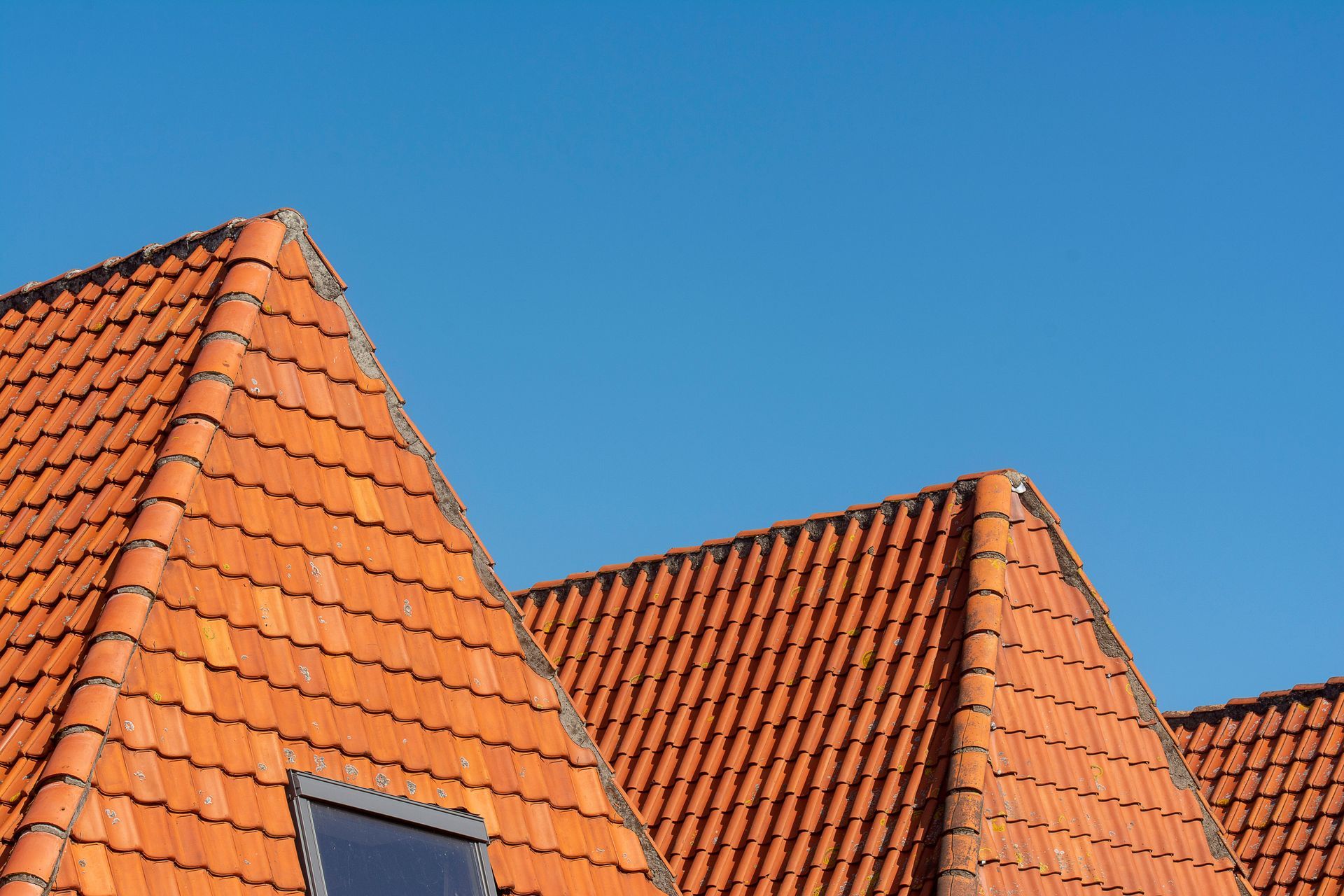
Stand at the end of any residential street in Bristol and look up, and you will see roofs wearing all sorts of colours nature never intended. Green stains running down the tiles, spongy green cushions along the ridge, crusty grey and orange patches clinging to the slates. Most people lump all of this together as moss, but it is usually three different organisms doing three different things, and knowing which is which tells you a lot about your roof.
It matters because each one behaves differently, damages your roof in its own way, and responds to treatment on its own terms. A soft wash with the right biocide deals with all three, but understanding what you are actually looking at helps you judge how urgent the situation is and what to expect afterwards. This guide breaks down the three main culprits on Bristol roofs and how to tell them apart from the ground.
The quick answer: Green streaks that look like stains are algae, spongy green clumps are moss, and flat crusty patches in grey, green or orange are lichen. All three thrive in Bristol's damp, mild climate, all three are removed by soft washing with a biocide, and moss is the one that causes the most direct physical damage to tiles and gutters.
1. Why Bristol roofs grow so much of it
Bristol offers close to perfect conditions for roof growth. The city sits near the Severn estuary and the Bristol Channel, so damp air is a constant, and the prevailing southwesterly winds bring wave after wave of Atlantic moisture. Winters are mild rather than harsh, which means growth is barely checked by cold. Add the mature trees that line so many suburban roads in places like Henleaze and Westbury Park, dropping shade and spores onto the roofs below, and you have an environment where algae, moss and lichen flourish.
Orientation makes a big difference on any individual house. North-facing slopes and any pitch shaded by trees or neighbouring buildings stay damp for long stretches, so they grow the most. The sunnier southern slopes dry out faster and often stay comparatively clear. If one side of your roof looks filthy and the other looks fine, that contrast is doing exactly what you would expect in this climate.
2. Algae: the green and black streaks
Algae is the flat, stain-like growth you see running in vertical streaks down a roof, usually green but often darkening to black. It is not raised or spongy. It looks painted on, and it tends to start near the ridge and wash downward with the rain. On the pale concrete tiles of Bristol's mid-century housing it stands out badly, which is why algae is often the first thing homeowners notice.
The good news is that algae is the least physically damaging of the three. It does not root into the tile or hold significant weight. The bad news is that it spreads fast and makes a roof look neglected long before anything serious is wrong. It also feeds the process, because a filmed, damp surface gives moss and lichen an easier foothold. Have you noticed dark streaks appearing on just one slope? That is algae getting comfortable, and it is a sensible early prompt to have the roof treated.
3. Moss: the spongy green clumps
Moss is the one everybody pictures. It forms thick, spongy, three-dimensional cushions, bright green when wet and yellowish-brown when dry, and it gathers in the joints between tiles, along the ridge, and anywhere water lingers. Unlike flat algae, moss builds up real bulk, and that is exactly why it causes the most trouble.
A heavy moss layer holds water against the roof like a sponge that never fully wrings out. In winter that trapped water freezes, expands and can flake the surface of concrete tiles, slowly wearing them down. Clumps also break loose and slide into the gutters, where they build into blockages that overflow and send water down the walls. On Bristol's older properties, that overflow is a common cause of damp patches on internal walls. Moss is the growth most worth removing promptly, because it is the one actively shortening your roof's life and interfering with drainage.
4. Lichen: the crusty patches
Lichen is the strange one. It forms flat or slightly raised crusty patches, often circular, in shades of grey, pale green, yellow and orange. It is tough, it clings hard, and it is remarkably persistent because it is a partnership between a fungus and an alga working together. Lichen tolerates conditions that would see off other growth, and it is extremely common on the clay and concrete tiles across the city.
Lichen roots into tiny surface imperfections and can be stubborn to shift, which is where a proper biocide treatment earns its place. Physically it is less destructive than moss, but it holds moisture, it looks unsightly, and on textured tiles it grips tightly enough that scraping at it risks damaging the surface. This is precisely why blasting it off with a pressure washer is a bad idea. The right approach kills it at the source and lets it release and weather away gradually rather than tearing at the tile.
5. Why it all comes off the same way
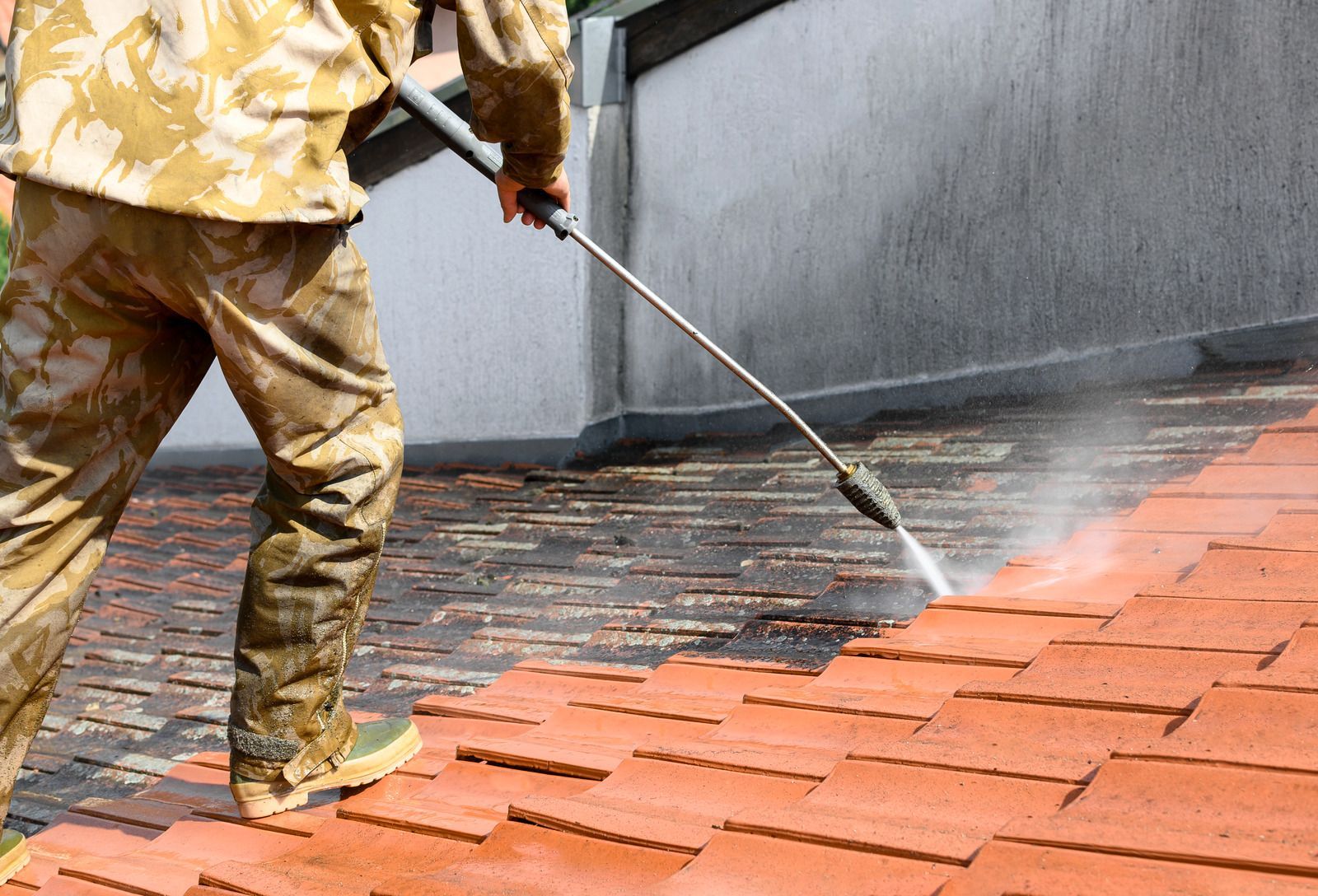
Whichever combination of algae, moss and lichen your roof is carrying, the correct treatment is the same: soft washing. This uses low-pressure water together with a biocide that kills all three organisms at the root. There is no high-pressure jetting, because forcing water under pressure at a roof strips the protective surface off tiles, drives water under slates, and can loosen the very fixings holding everything in place.
After a soft wash, thick moss is usually cleared during the visit, while the biocide keeps working on the remaining algae and lichen for weeks afterwards. The dead growth then dries, releases its grip and weathers away naturally with the wind and rain. It is a gentler process that respects the age and condition of Bristol's varied roof coverings, from Victorian Welsh slate to post-war concrete tile, and it protects rather than punishes the surface.
6. What the growth is telling you about your roof
Beyond identification, the pattern of growth is useful information. A roof that greens up quickly again after cleaning is usually one that stays damp, whether from deep shade, overhanging trees, or a north-facing pitch, and that tells you it will benefit from more regular attention. Heavy moss concentrated in one area can point to a spot where water is pooling, which is worth a closer look.
None of this means panic. Most Bristol roofs carrying all three growths are structurally fine and simply overdue a clean. The value of knowing what you are looking at is that you can act at the right time rather than waiting until the moss is dropping into the gutters. Catching it early keeps the work straightforward and the roof in good shape for far longer.
- Algae: flat green or black streaks that look like stains, least damaging but spreads fast and signals a damp surface.
- Moss: spongy green clumps in the joints and ridge, holds water, contributes to frost damage and blocks gutters.
- Lichen: crusty grey, green or orange patches, tough and clingy, unsightly and best removed with biocide rather than force.
- Treatment: soft washing with a biocide removes all three safely, without the damage high-pressure jetting causes.
Frequently Asked Questions
Is moss worse than algae for my roof?
Yes, in terms of physical damage. Moss holds water, adds weight and blocks gutters, while algae is mainly a cosmetic stain, though it does help other growth take hold.
Why does lichen keep coming back?
Lichen is very hardy and clings tightly, so it can be slow to clear. A proper biocide treatment kills it at the root and it then weathers away, rather than being scraped off.
Can I just scrape or jet the growth off myself?
It is not advisable. Scraping and high-pressure washing damage the tile surface and can drive water under slates, which often causes more expensive problems than the growth itself.
Does one type mean my roof is failing?
Usually not. Most roofs carrying algae, moss and lichen are perfectly sound and simply need cleaning. Growth is about surface conditions, not structural failure.
How quickly will it grow back after a clean?
That depends on shade and exposure. Damp, shaded and tree-lined Bristol roofs regrow faster, which is why periodic cleaning keeps things under control.
Not sure what is growing on your Bristol roof?
Ben's Roof Cleaning brings over 15 years of experience in safe, effective roof cleaning across Bristol and the surrounding area. Get in touch or call 0117 456 2272
for a free, no-obligation quote.
Know what you are looking at, then deal with it properly
Algae, moss and lichen each tell their own story about your roof and the conditions around it, but they share one solution. A careful soft wash removes all three without harming the tiles, and understanding the difference simply helps you judge when to act. If your Bristol roof is wearing any of these, have it looked at, get it treated properly, and keep it clean before the growth has a chance to do any real harm.