Roof Cleaning or Roof Replacement: What Your Bristol Home Really Needs
A green, streaked, moss-covered roof can look far worse than it actually is. Plenty of Bristol homeowners take one glance up from the pavement in Bishopston or Totterdown, see a carpet of moss along the ridge, and assume the whole covering is finished. More often than not, the tiles or slates underneath are perfectly sound and just need cleaning. The trouble is that a tired-looking roof and a failing roof can seem identical from ground level, which makes the decision between cleaning and replacing genuinely difficult.
Getting it wrong is expensive in both directions. Replace a roof that only needed a wash and you have spent thousands you never had to. Keep cleaning a roof that is actually past saving and you throw good money after bad while the leaks get worse. This guide walks through how to tell which camp your roof falls into, what really drives the decision, and why so many Bristol homes need far less work than the first impression suggests.
The quick answer: Most roofs that look bad simply need a professional clean and moss removal, not replacement. If the tiles or slates are intact and the structure is sound, cleaning restores them for a fraction of the cost. Replacement is only the right call when the covering itself has failed, when large numbers of slates are cracked or slipping, or when the timber underneath has rotted.
1. What a dirty roof is actually telling you
Moss, algae and lichen are surface problems. They grow on top of your tiles because Bristol gives them everything they want: mild winters, damp air rolling in off the Severn estuary, and long spells of wet weather driven by our prevailing southwesterlies. A north-facing slope that never quite dries out will turn green far faster than the sunny side of the same house. None of that means the roof has failed. It means the roof has been colonised by plants, and plants can be removed.
The confusion comes because a heavy growth of moss does cause real damage over time. Moss holds water against the tiles, and in a hard frost that trapped water expands and can flake the surface of concrete tiles. Clumps break off and wash into gutters, blocking them and sending water down the walls instead. So a neglected roof will eventually deteriorate. The key point is that catching it and cleaning it stops that process, whereas leaving it is what pushes a repairable roof towards replacement.
Have you actually seen water coming in, or does the roof simply look grim? That single question separates most cleaning jobs from most replacement jobs. A cosmetic problem is a cleaning problem.
2. The signs that point to cleaning
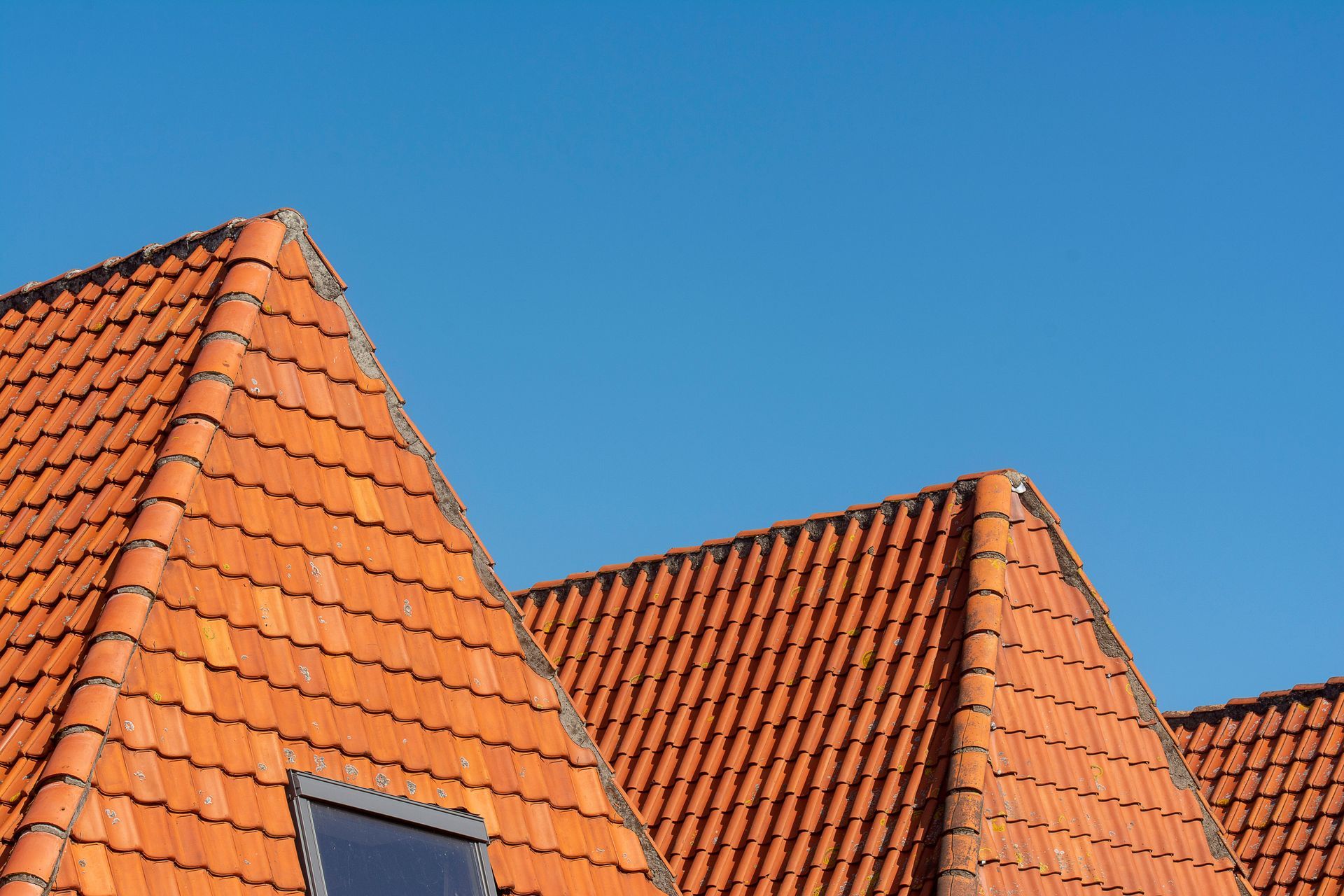
If your roof is covered in green algae streaks, thick moss along the tile joints and ridge, or blotchy grey lichen, but the tiles themselves are whole and sitting flat, you are looking at a cleaning job. This is the typical picture on the concrete interlocking tiles found across post-war Bristol suburbs and on the clay tiles of older properties in areas like Redland and Henleaze.
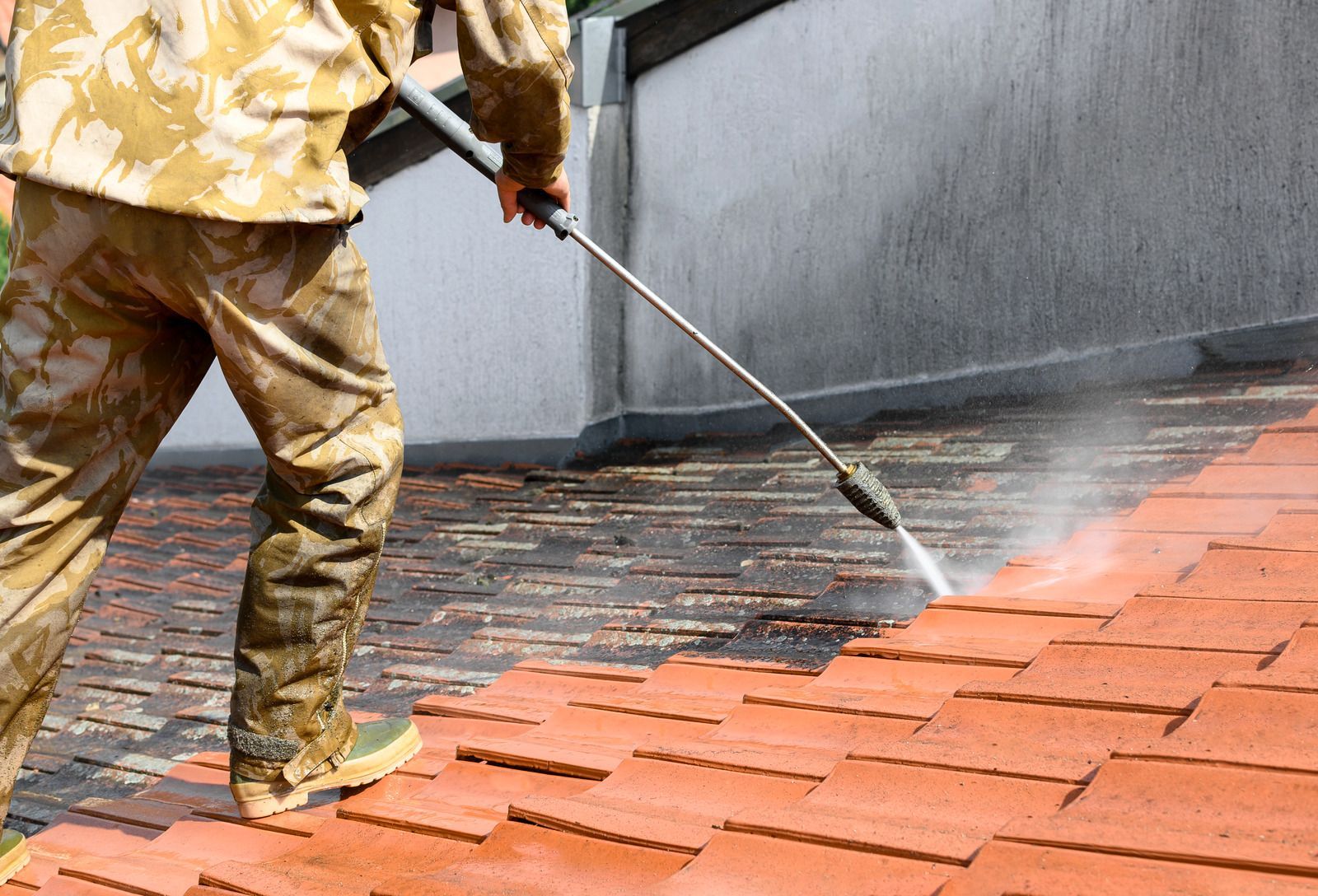
Soft washing is designed for exactly this. It uses low-pressure water combined with a biocide treatment that kills the moss, algae and lichen at the root rather than just blasting the top layer off. The growth then dies back and weathers away over the following weeks and months. Because there is no high pressure involved, the tiles are not damaged and their protective surface stays intact, which matters a great deal on older concrete tiles that have already lost some of their factory coating.
When the underlying covering is fine, cleaning gives you back a roof that looks close to new and buys you many more years of service. That is the outcome for the large majority of the roofs we are called out to look at across the city.
3. The signs that point to replacement
Replacement becomes the honest answer when the covering itself has given up. On Bristol's many Victorian terraces roofed in Welsh slate, the usual culprit is nail fatigue. The old iron nails corrode after a century or more, and slates start slipping out of position or sliding off entirely. If you can see gaps, missing slates, or a row that has slumped, the fixings are failing and no amount of cleaning will hold them up.
Other clear replacement signals include widespread cracked or delaminating slates, concrete tiles that have gone soft and crumbly at the edges, sagging roof lines that suggest the timber battens or rafters have rotted, and daylight visible through the roof from inside the loft. Persistent leaks that keep returning after repairs are another warning that the covering has reached the end of its life rather than having a single fixable fault.
It is worth being clear that partial repair sits between the two extremes. A handful of slipped slates on an otherwise good Welsh slate roof can often be re-fixed, and the roof cleaned, without a full strip and re-cover. Replacement of the entire covering is a big job and should be reserved for roofs that genuinely need it.
4. Why the Bristol climate matters to this decision
Bristol sits in one of the damper corners of England. Warm, moisture-laden air arrives off the Atlantic and the Bristol Channel, the hills around Clifton and the Avon gorge funnel weather in unpredictable ways, and the tree-lined suburbs keep a lot of roofs in shade for much of the day. All of this favours moss and algae, which is why local roofs green up quickly and why so many people assume the worst.
The upside is that this same climate rarely destroys a sound roof on its own. Our winters are mild compared with much of the country, so the freeze-thaw damage that wrecks tiles in colder regions is less severe here. That tips the balance further towards cleaning. A Bristol roof that looks alarming is usually a healthy roof wearing fifteen years of biological growth, not a structure on the brink of collapse.
5. What each option costs you over time
Cleaning and replacement are not really comparable numbers, and it would be wrong to invent figures for either. What can be said with confidence is that a professional soft wash and moss treatment is a small fraction of the cost of stripping and re-covering a roof. Replacement runs into thousands and involves scaffolding, disposal, new materials and days of labour.
The smarter way to think about it is value over time. Regular cleaning every few years protects the covering you already have, keeps the gutters clear, and delays the day you need to spend on replacement, sometimes by many years. Money spent on a clean is money spent extending the life of an asset. Money spent on premature replacement is money spent on a solution to a problem you did not have.
6. How to decide with confidence
The reliable way to settle the question is to have someone get up close, either onto the roof safely or with proper access, and inspect the actual condition of the tiles or slates and the state of the fixings. Ground-level guesses are unreliable precisely because moss hides the very things you need to see.
A trustworthy assessment will tell you honestly which category your roof falls into. If it is sound, you get a clean and a plan to keep it that way. If it genuinely needs work, you find out before a small problem becomes a flooded loft. Would you rather know now, while the choice is cheap, or after a winter storm has forced it?
- Look for intact tiles: whole, flat, well-seated tiles or slates under the moss almost always mean a clean is all you need.
- Watch for slipping slates: gaps, missing pieces or slumped rows on old Welsh slate point to failing nails and possible replacement.
- Follow the water: actual leaks and damp in the loft signal a covering or structural fault, not just surface growth.
- Act early: cleaning a mossy roof now is what keeps it out of the replacement category later.
Frequently Asked Questions
Can a roof that looks really bad still just need cleaning?
Yes, and this is the most common outcome we see. Heavy moss and green streaking look dramatic but sit on top of tiles that are often completely sound underneath.
Will cleaning damage older tiles or slates?
Not when it is done by soft washing. Low-pressure water and a biocide treatment lift the growth without the force that high-pressure jetting uses, so fragile older coverings are protected.
How do I know if my slates are slipping or just dirty?
Slipping slates leave visible gaps, uneven rows or pieces on the ground. Dirty slates are discoloured but still sit flush. A close inspection settles it quickly.
Does moss really shorten a roof's life?
Left long enough, yes. It holds moisture, contributes to frost damage and blocks gutters. Removing it regularly is what prevents that slow decline.
Is it worth cleaning a roof I might replace in a few years?
Often yes, because a good clean can push that replacement several years further out and keeps the roof performing in the meantime.
Not sure whether your Bristol roof needs cleaning or replacing?
Ben's Roof Cleaning brings over 15 years of experience in safe, effective roof cleaning across Bristol and the surrounding area. Get in touch or call 0117 456 2272
for a free, no-obligation quote.
A clean roof usually beats a new one
Before you commit to the cost and upheaval of a new roof, find out what is really going on under the moss. The odds are strongly in your favour that a professional clean will restore the roof you already have and save you a great deal of money. Get it looked at properly, deal with any genuine repairs, and let the covering carry on doing its job for years to come.